
Tags
Greenwich Village, Houston Street, Joe Tesla, Love the Book First Chapters, Mianus Bridge, Rebecca Cantrell, The Tesla Legacy
![Pageflex Persona [document: PRS0000448_00039]](https://lovethatbookfirstchapters.com/wp-content/uploads/2015/01/the-tesla-legacy-medium.jpg)
Here is a treat! Hot off the press, read the beginning of The Tesla Legacy, the sequel to the award-winning The World Beneath. We bet you’ll love it!
PROLOGUE
Winter, 1896
46 E. Houston Street
New York, New York
Most men would not care about a simple pigeon, but Nikola Tesla was not most men. And so, when the pigeon found him in the vastness of the city, he recognized her as his own. Each dawn, her white wings cut through the cold air of New York and carried her over the bustle of horses and men to his windowsill. In the many months he had known her, she had come to trust him enough to feed from his palm, her cold beak tapping against his skin.
On this winter morning, he stood with his window thrown open longer than usual, waiting for her. He checked his gold pocket watch again and again.
Finally, a white dot appeared against the gray light of dawn. The dot stuttered and dropped in changing air currents. Worry fluttered in his heart as he watched her erratic flight.
She landed on the snowy windowsill, scattering clots of snow onto his rug and down toward the street below. With extreme care, he cupped her body. Her feathers were scarcely colder than the flesh beneath. Her silver eyes looked dull, but showed no alarm—she trusted him.
He brought her inside to the perch in an empty cage next to his bed. His other pigeons cooed in their cages, but she took no notice of them. Her head drooped down to her white breast. She had spent her energy reaching him.
When she warmed, he would feed her. His pigeon keeper, Mr. Smith, would arrive later that morning, and Nikola would ask him what else they could do for her. Mr. Smith had a deep knowledge of pigeons and their maladies. Surely he could make her well.
Nikola washed his hands and watched her from his stiff chair. With each blink, her familiar silver eyes disappeared for longer and longer, until they failed to open at all. Her chest no longer vibrated with breath.
With a sigh, he lifted the limp body from her perch. She had come to him, not to be healed, but to die in warmth and peace. At least he had been able to grant her that.
He cradled the soft body between his palms before placing her inside a plain wooden box lined with a monogrammed handkerchief. He wrapped the warm silk around her like a shroud. Later, he would bury her in the park, but he must first do his day’s work.
He set the box on the table next to his bed, washed his hands again, and went to breakfast. He met with Mr. Smith to tell him only that the white pigeon had passed away, and that he would bury her himself. Mr. Smith said that nothing more could have been done for her, and she was fortunate to have a safe, loving place to take her last breaths. Nikola only nodded, and Mr. Smith did not press him further.
Mr. Smith was the only person who understood about Nikola and the pigeon. Other men would have considered him mad, but Nikola had loved the hen for a long time. The sight of her coming for her morning corn had moved him more than the arrival of his most distinguished visitors. Today was to have been a day of triumph, but melancholy had marred it. She, the most loving constant in his life, had left him.
Her image followed him down to his basement. With one hand in the pocket of his overcoat, he walked through the empty room. Today’s experiment must be conducted here, and not in his upstairs laboratory—not in front of his assistants. He wanted no announcements in the press before he was ready, as had happened so often before.
Tall wood-framed cages held the tenants’ belongings—ordinary items like bedding and furniture and brass candlesticks. Between the cages ran a line of steel columns. Those steel bars faithfully bore the weight of the building above. Taken for granted, they performed their essential task year after year, unyielding and eternal.
He stopped next to the column in the center of the room. Its base rooted deep into the earth beneath his feet, and its crown rose far above his head. This humble steel would serve as the perfect material on which to test his newest device.
When he drew a metal object about twice the size of a deck of cards from the pocket of his jacket, a feeling of satisfaction dulled his grief. He held the device in his palm just as he had recently held the pigeon, with reverence. An uninformed observer would see only the object’s square base with its dial and a curiously turned steel cylinder rising a few inches from the top. This rounded casing could withstand temperatures of more than two hundred degrees and pressure of more than four hundred pounds per square inch.
Nikola visualized the highly efficient pistons he had built inside, supreme examples of the art and skill that marked his peculiar genius.
His long fingers stroked the casing. Ordinary looking, but holding immense power. He had built it to test a principle that appeared innocuous, but could destroy Earth itself—a bountiful earth that contained him, his family, and, until recently, a precious white pigeon.
No one else had recognized this resonance, nor thought to harness it, because no one else heard the vibrations of objects as he did. No one else but he felt the telltale tremble of everyday things with their fingertips.
Using simple wooden clamps, he affixed the device to the steel column, tugging on the cylinder to make certain that it couldn’t be dislodged easily. He touched two fingers to the thick column so that his fingertips barely grazed the metal. With the other hand, he turned the dial.
He pictured pistons inside moving in silent precision as they slowly accelerated to the requested speed, like a pigeon pumping its wings to fly. For a long moment he stood next to the column with his head cocked, listening with his ears as well as his fingers. He adjusted the device’s oscillation rate. Again, he waited and listened. He repeated this action countless times, seeking to tune his Oscillator to the natural vibration of the steel.
Eventually, the metal under his fingertips trembled to a faint life. His device had matched the frequency of the steel’s resonant frequency. Time would do the rest.
He left the Oscillator to its work while he unlocked a wooden storage unit containing spools of wire, a stained metal table holding egg-shaped globes of blown glass, and a ladder-back chair. He grasped the chair by its top rung and placed it next to the column, then dusted the seat with his handkerchief, sat, and crossed one long leg over the other. Again, he placed two fingers against the steel, like a doctor feeling for a pulse.
The metal’s deep song thrummed through his fingers and up his arm. The music vibrated in the synovial fluid in his shoulder, trilled through his stomach, and pressed against his ears. He closed his gray eyes to concentrate on the metal’s song, and a small smile crossed his pale face.
He was in tune with the steel.
Mesmerized, he listened too long. The steel trembled too quickly. An ordinary man might not have seen the change, but he did. Tiny oscillations, no bigger than a pigeon’s heartbeat, shivered the length of the column.
The column cracked, like lake ice breaking free after winter.
Sounds intruded on his consciousness—a siren, the tinkle of breaking glass, the creak of other steel columns flexing. His device had succeeded, but perhaps too well.
With one decisive movement, he stood and reached to turn it off. Hot steel seared his fingertips. He gritted his teeth and tried again, but the dial had frozen in position, and the clamps, too, would not budge.
His device pounded remorselessly on.
His usually calm heartbeat sputtered in his chest. If he didn’t stop the motion soon, the column itself might shatter. Even the surrounding columns might break apart. If so, this beautiful building would collapse and bury its occupants, including him and his pigeons upstairs. He would not let this building become their tomb.
He wheeled on the heel of one patent leather shoe and ran for the cage. Thinking it a useless precaution the night before, he had nonetheless given in to a niggling doubt. He had taken a sledgehammer from its usual location in the corner and rested its handle against the table’s edge.
Now he was grateful he had. In two long steps he reached the hammer. He wrapped his long white fingers around the handle and returned to his device. He lifted the hammer high and brought its head down on the deceptively small cylinder. The metal case cracked, but gears within continued to turn. He had engineered his device to withstand shock and force. Again, he brought down the hammer, and yet a third time.
The gears shrieked like a baby bird as metal ground against metal. He flinched, then hardened his heart against his creation. He smote it blow after blow until the misshapen steel fell to the floor and was still. He had stopped its mechanical heart.
Heavy fists pounded on the front door to the building, and angry voices outside shouted for admittance. He had only minutes before one of his neighbors let them inside. He must not be found down here with the device. It was still too hot to touch, so he kicked it into a corner with the toe of his shoe. He polished that toe against the back of his immaculate trousers, smoothed his hair, and settled his jacket into place.
His long legs skipped every other stair as he flew to his laboratory. He entered and closed the door quietly behind him. His assistants looked at him with surprise. He smiled to allay their suspicions and glanced around the laboratory.
Glass had broken in this room, too. The windows had given way, and one assistant sported a thin cut across his cheek. An oval bulb lay shattered on the floor.
His device’s power was writ large in the destruction that surrounded him.
Curious and exhilarating to think that something so small could produce such dramatic changes in the world. Yet he himself, like every man on Earth, had grown from something as small as an egg.
Angry voices grew louder. He couldn’t yet make out their words, but he understood the tone and recognized an Irish accent. The local constabulary, then.
Knuckles rapped against the door to his laboratory. Nikola glanced around once before calling out, “Enter!”
The door slammed open, and two men strode inside. They looked like life-size windup dolls in matching blue uniforms with silver buttons and with handlebar mustaches and worried eyes. They glared at him, although they could not know that he was at fault.
“There was an earthquake!” shouted the one in front, the leader. He was the fatter of the two, and he had the larger mustache—blond shrubbery against a face as freckled as a plover’s egg.
“A horse fell down and was almost run over by the cab.” The other policeman clenched his meaty fists.
“I don’t suppose you know about that?” asked the leader.
Both men hovered in the wooden doorway as if afraid to venture inside.
Nikola would not have let the building bury his hen, or himself. “The danger is past.”
“What danger do you mean? Why is it past?” The man’s freckles squirmed when he spoke.
“Why, the earthquake. I felt it here in the laboratory.” Nikola gestured to the broken glass on the floor so that they would see he hadn’t been spared. “It knocked my bulbs off the table and broke my windows, but it is over now, yes?”
Such a machine! It intrigued him; it did not frighten him. His heart soared at the thought of what such a device could do—send messages perhaps, or destroy rock for mining. Glorious possibilities flashed through his mind. If only mankind had the wisdom to harness such power for good use.
The freckled policeman looked at him with his mouth still partially open. Native intelligence and suspicion shone from his snapping blue eyes. “Just a simple earthquake then?”
“What else could it be, my good man?” Their imaginations could conceive of nothing but this natural explanation.
The man fingered the long black stick he carried in his belt. He looked as if he wanted to take it and strike Nikola.
Nikola drew himself up to his full height and stared him down. “That will be all.”
Anger flashed across the man’s face, but he turned away, dismissed. He had not found what he sought, and so he retreated.
Nikola thought again of the wisdom and courage his beloved bird had displayed by knowing how to find him and coming across snow and cold to say farewell. He had never met a person like her. And he never would.
He had already filed a patent for his device, which he had named the Oscillator, but he must revise the patent’s specification so that the device could not be built properly from those plans. Mankind was not ready for a weapon of such power.
He would rebuild the device, refine, and test it again, until he knew that he could control it, because he could not leave it uncompleted. After that, he would hide it away. The true device could be used only by one of uncommon courage and wisdom. He doubted that he would ever come to know such a person.
And so the device must remain hidden.
June 28, 1983
Mianus River Bridge
Greenwich, Connecticut
George Tesla was drunk. This wasn’t new for him, but the reason was. He was going to be a father. Fifty years old, and he’d knocked up a thirty-year-old carnie. Someone careful enough to live through a trapeze act ought to be careful enough to not get pregnant. But she hadn’t been.
Tatiana flat-out refused to talk about abortion or adoption or any sensible solution to the problem. She was perfectly willing to talk about leaving him to raise the baby alone, but nothing else. Her mind was set.
He leaned against the cold side of the bridge and took a long sip of Jack Daniel’s from his silver hip flask. He’d bought the flask when he was first made professor of mathematics at New York University. Another thing that would have to change, since Tatiana had told him she had no intention of giving up performing to move to New York and be a faculty wife. He couldn’t imagine the fiery Romanian trading her sequined leotards for wool skirts and pearls.
He dropped the flask in the pocket of his tweed jacket, where it clinked against the other metal object he carried. Before he met Tatiana, he’d gone on a quest to find this little thing. It had been hidden before his birth, but he’d found it anyway. He’d carried it around for years—its weight a constant reminder that he was squandering a great legacy. Many things were possible for those smart enough and daring enough. He suspected that he was neither.
A car roared down the road, its headlights blinding him. For good measure, the driver honked at him—another good citizen chastising him for being up here on a public road, drunk, at one in the morning. But he had nowhere else to be.
Seventy feet below, the black river rolled along like tar. If he jumped, that would solve his problem. He filed this away for later consideration.
He fumbled the metal object out of his pocket and set it on the railing next to him. It didn’t look like much—a square metal base with a cylinder sticking out the top—but Nikola Tesla had told his father that it could do great things. Nikola Tesla had patented it, but it had never worked. George wondered if he had patented a flawed device on purpose, to discredit his own theory. If so, maybe the object next to him could do great things.
He tapped his flask against the side of the device in a fake toast. “To great things. For one of us.”
The device didn’t answer, so he wasn’t that drunk. Maybe it knew it wouldn’t work.
But if it didn’t work, why had its creator entrusted the secret of its existence to only one man? George’s father said that he was the only one who knew about it, and he must have been, because once George had figured out its location, he’d found the device waiting for him. If anyone else had known where to find it, they would have taken it.
He dumped the flask and the device into his pocket and swung one leg over the railing. He wasn’t going to jump. He was a scientist, and he was going to do an experiment.
He rested his feet against the outside lip of the bridge. The river rushed below, dark and deep and cold, and he held on to the cold metal railing with both hands. At least now nobody above could see him and beep at him.
Eventually, he persuaded himself to unclench one hand from the railing. It took him a few tries, because he was working one-handed, and he nearly dropped the device twice, but eventually he managed to clamp it to the side of the bridge. The device stuck out like an accusing finger. Like Tatiana’s accusing finger.
He cocked his head and listened. No cars close by. The bridge was empty. Timing wouldn’t get any better than this. Time to start his experiment.
He turned the tiny dial on the top of the device. It immediately started thumping away. He gaped at it. He’d replaced the power source with batteries, but he hadn’t expected the old mechanism to work. He played with the dial, trying to match the natural resonance of the steel. Eventually, he seemed to get it dialed in, because the bridge started to vibrate against his stomach.
It didn’t feel like much, maybe like a truck driving by. Not even a truck. A car. A little convertible. Not a threat.
Headlights appeared in the distance, and he swore. From the sound of the engine, a semi-trailer truck was approaching. Probably nothing to worry about, but he ought to shut the thumper down just in case. He reached for the device, missed it on his first drunken swipe. Was it his imagination, or was the bridge shaking?
Heat blistered his fingertips when he touched the dial, and it didn’t budge. He couldn’t turn the damn thing off. He could let go and fall in the water, let all this be someone else’s problem, but his hand refused to release the railing. Maybe fear, or maybe a sense of responsibility.
Either way, he had to do something. He pulled the flask out of his pocket and used it to pound on the device. It moved a hair, then another. The truck thundered closer, its driver completely oblivious. Another truck was tucked behind it. A convoy, trucking through the night.
When the truck hit the span George was holding on to, the bridge let out a tremendous crack. The device fell, and he instinctively caught it, his hand slipping off the bridge.
He tumbled toward the river. His feet hit the water first. It felt like he’d landed on concrete, and the force drove him deep underwater. He fought for the surface. He didn’t want to die. He wanted to stand by Tatiana. He wanted to see his child.
By the time his head broke the surface, he’d traveled a hundred yards downstream, still clutching the device. The span he’d been standing on had collapsed. He watched as a semi barreled right over the broken edge of the bridge and landed nose-down on the stony bank where another truck had already fallen. The drivers were likely dead.
Another car piled on, then a screech of brakes.
His head went under. He still held the device. It had burned his palm, but he didn’t let go. He couldn’t let it out of his possession.
He’d killed the men in those trucks, the people in that car. One drunken mistake, and now those people weren’t going home to their families, to their daughters and sons. He could never make that right.
The current dragged him relentlessly onward.
Present day
Subway tunnels trap New York’s heat. Heat soaks into sticky pavements and tired sidewalks. Hot, humid air blows into the tunnels’ open mouths and lingers in the dark places until fall.
Joe Tesla tried to pretend he enjoyed the heat in the upper tunnels, but it reminded him of the second ring of hell. Summer was meant to be spent outside, basking in the sun, his father had always said. Good times, not the second ring of hell.
Joe walked between steel rails that brought trains from the rest of New York into Grand Central Terminal. His service dog, a golden retriever/yellow Labrador mix named Edison, panted at his side. They were performing what was becoming a daily ritual in which Joe went to the limits of the darkness, just to see if today he could break out into the light. Aversion therapy, psychiatrists called it.
It wasn’t working, but he would not give up. Today, more than ever, he wanted to break free of his self-imposed darkness and go outside into the light and fresh air. He wanted to go outside to say good-bye.
Ahead, a square of daylight beckoned. Gray light filtered in at the end of the rectangular tunnel. He drank in the sight of shining silver tracks, a bird’s shadow on the ground, a tree in the distance. A real, green, living tree. Outside.
He’d long ago memorized the train schedules, and he and Edison had enough time to make it to the light before the next one arrived. Following his training, Edison stayed closed by Joe’s leg and far from the third rail. They were safe, from trains at least.
Joe knelt to cover Edison’s sensitive ears as a scheduled train approached on a nearby track. It posed no threat to him, but he worried that the noise couldn’t be good for the dog. The animal’s brown eyes met his, calm as always. Nothing seemed to faze the yellow dog. If Joe could be like one creature on Earth, he’d pick Edison. Not that he got to pick.
The train passed, and Joe let go of the dog and started forward again. He was still in the shadows where the gray light didn’t reach. Hot outside air stroked his cheeks. It smelled of cinder and smog, but also a little of the sea and green grass, or so he liked to think.
He walked toward the light, and his breathing sped up. He forced himself to slow his breaths, hoping that would calm him down, but knowing it wouldn’t. He fought this knowledge with each shuddering breath. He wiped his wet forehead on his sleeve and kept breathing.
Then full adrenaline kicked in. His heart got into the action, beating at twice its normal rate. It felt as if he’d just sprinted across a football field.
If his heart didn’t stop racing, he was going to die. Panic coursed through his veins. He had to run back into the tunnels. He’d be safe there.
He used every scrap of willpower to keep his trembling legs from bolting down the tunnel of their own accord. He wasn’t going to die. Nobody ever died of a panic attack. He repeated that twice, as if his body might believe the words. It didn’t. But today he had to try harder. For his mother’s sake. And his father’s.
First, he must get his heart under control. He closed his eyes and imagined he was somewhere safe. He was standing in front of his underground house. The house was a yellow Victorian, with red and white trim, bright and sturdy, protected in its cocoon of rock. Its paint gleamed in the orange light shed by round, hand-blown light bulbs strung overhead.
He pictured each detail—the three steps up to the front porch, the white door he dusted until it gleamed, the wrought-iron wall lantern that he always left on, the windows upstairs and down decorated with stained-glass flowers and leaves. Inside that house, he was safe. He took a deep breath. Safe.
Keeping the picture of his house in his head, he took a step forward. He didn’t dare open his eyes. Edison pressed against his leg, and the contact comforted Joe. He wasn’t alone. Edison was always there. He took another step.
Hot air brushed his face, a breeze from outside. He opened his eyes the tiniest crack. A thread of light leaked in. His heart slammed against his ribs so hard it felt as if it might break out of his chest and roll into the tunnels behind him.
His breath came fast and ragged. He tried to control his breaths, slow them down, but his body had taken over. His tense muscles begged to flee. He was so close to the outside. And he couldn’t take another step.
Retching, he leaned forward. Edison fastened his teeth on Joe’s pant leg and pulled. He tottered, terrified he might fall into the light. He caught his balance and let the dog pull him backward, step by step, into the familiar darkness.
His stomach roiled. The first time he’d tried this had been after breakfast, and he’d thrown up on the tracks. He knew better now, and came here only on an empty stomach.
Edison nudged his nose under Joe’s hand and tilted his head back. He urged Joe to pet him, to relax. Joe ran his hand along the dog’s warm back. His legs still shook, but he didn’t feel as if he were about to die anymore. He petted the dog, controlled his breathing, and slowly calmed down. He wasn’t going to die, but he wasn’t going to go outside either. Not today.
He’d turned his back on the light as he fled, but he faced it again now. The entrance was an empty mouth that mocked him. The light and wind and trees might be forever out of his reach. But he had gone nearly a yard farther than yesterday. Not enough, but progress.
A train came through, again on a different track, and he covered the dog’s ears. The simple act of protecting Edison brought him all the way back to himself. After the train passed, he pulled a dog treat out of his pocket and gave it to Edison. “You earned this, buddy.”
The dog swallowed it in a single gulp.
Joe headed toward the tunnels that led to Grand Central Terminal. Today, his brain had betrayed him—something he’d grown to expect. Once, he’d prized his brain. It understood things that other brains didn’t. His brain had led him out of a difficult childhood into early entrance to Massachusetts Institute of Technology—on a full scholarship—while other boys his age were freshmen in high school. His brain had let him coast through his classes, earn his degrees, found his own company, and retire a multimillionaire before most people bought their first house. It had been a good brain, but now it wouldn’t even let him sit in the sunlight.
But he had to cut his brain some slack—it wasn’t at fault. Someone had poisoned it, and he had blood tests to prove that poison had caused his crippling agoraphobia. Since he’d found that out, he’d spent a great deal of time and money trying to discover who had poisoned him and why. He’d investigated everyone who had access to his food and drink on his last days outside, but all his inquiries had led nowhere.
A large key ring at his belt jangled when he stumbled over a train tie. The keys came with the house—they provided access to all the doors in the tunnel system. With these keys, he, and he alone, could open each door in his subterranean world and see what lay behind it. Too bad his brain wasn’t so straightforward.
Edison bumped Joe’s knee with his nose, as if to remind him he was OK. That his life still had good things. That he was safe.
If only it were that easy.
Pre-Order today and have it downloaded next Thursday!
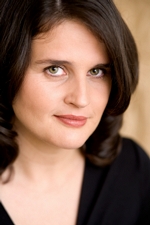 New York Times bestselling author Rebecca Cantrell’s novels have won the Bruce Alexander and the Macavity awards and been nominated for the Barry, Mary Higgins Clark, APPY, RT Reviewers Choice, and Shriekfest Film Festival awards. She and her husband and son just left Hawaii’s sunny shores for adventures in Hannah Vogel’s hometown–Berlin.
Copyright © 2015 by Rebecca Cantrell
No part of this work of fiction may be copied or distributed from this blog without express permission

 Love That Book! First Chapters